
Holiday Traditions & Community | Ken’s Notary
During the holiday season, the moments people remember most are often small: a familiar recipe, a note tucked into a Christmas card, a family member arriving at the door, or a story retold at the kitchen table. In Pennsylvania’s Coal Region, one especially recognizable tradition involves the scent of oranges, honey, cinnamon, and cloves drifting through the house. That means someone may be making boilo.
Although boilo is not a notarial subject, it is part of the local community we serve. Sharing the story of the drink is a seasonal way to celebrate the families, customs, and neighbors that have made northeastern Pennsylvania home for generations.
What is boilo, and why is it associated with Christmas?
Boilo is a traditional Coal Region drink generally prepared with honey, citrus, spices, and whiskey. Many local households serve it warm in small amounts or give refrigerated jars to adult friends around the holidays. It is particularly associated with communities such as Shenandoah, Mahanoy City, Frackville, Pottsville, Girardville, and Tamaqua.
The Christmas connection is partly practical: oranges, cloves, cinnamon, and ginger produce a fragrance associated with winter gatherings. More importantly, boilo became a ritual. Preparing it meant spending time together, sometimes making enough to give away, and keeping a treasured family recipe alive.
For some families, boilo appears around Thanksgiving. Others make it for Christmas Eve, Christmas Day, tree-trimming parties, or New Year’s Eve. It can also appear at community celebrations and contests outside the winter season.
Where did the recipe come from?
The drink is widely linked to krupnikas or krupnik, a honey-and-spice liqueur with roots in Lithuania, Poland, and neighboring parts of Eastern Europe. Immigrant families carried culinary traditions to Pennsylvania as the anthracite mining industry grew in the nineteenth and early twentieth centuries.
The Schuylkill County Ethnic Heritage Study documents the importance of Lithuanian and other immigrant communities to towns in the county. Families established neighborhoods, churches, businesses, and cultural organizations while adapting familiar foods and drinks.
Coal Region boilo likely developed gradually, rather than being invented on one particular day by one recorded person. Fresh oranges and lemons play a prominent role in many Pennsylvania versions, while the older liqueur tradition emphasizes honey and botanicals. Each household added its own touches, creating the diversity of boilo recipes enjoyed today.
More than a drink: the custom of giving boilo
One of the more generous sides of the tradition is the exchange of homemade jars. A neighbor stops by with a small gift, a relative brings some to Christmas dinner, and friends compare whose recipe has the right balance of sweetness and spice.
Those conversations are about more than the ingredients. The recipe may have belonged to a grandmother or uncle. A particular family member may have insisted on caraway seeds; another may have preferred extra lemon or ginger. When someone continues the recipe, they keep a small part of that family history alive.
Local reporting by WVIA describes how boilo remains a source of pride in the Coal Region and how neighbors give jars to one another. The Schuylkill County Fair has even held competitions for traditional, apple-pie, and other variations.
What’s in a traditional batch?
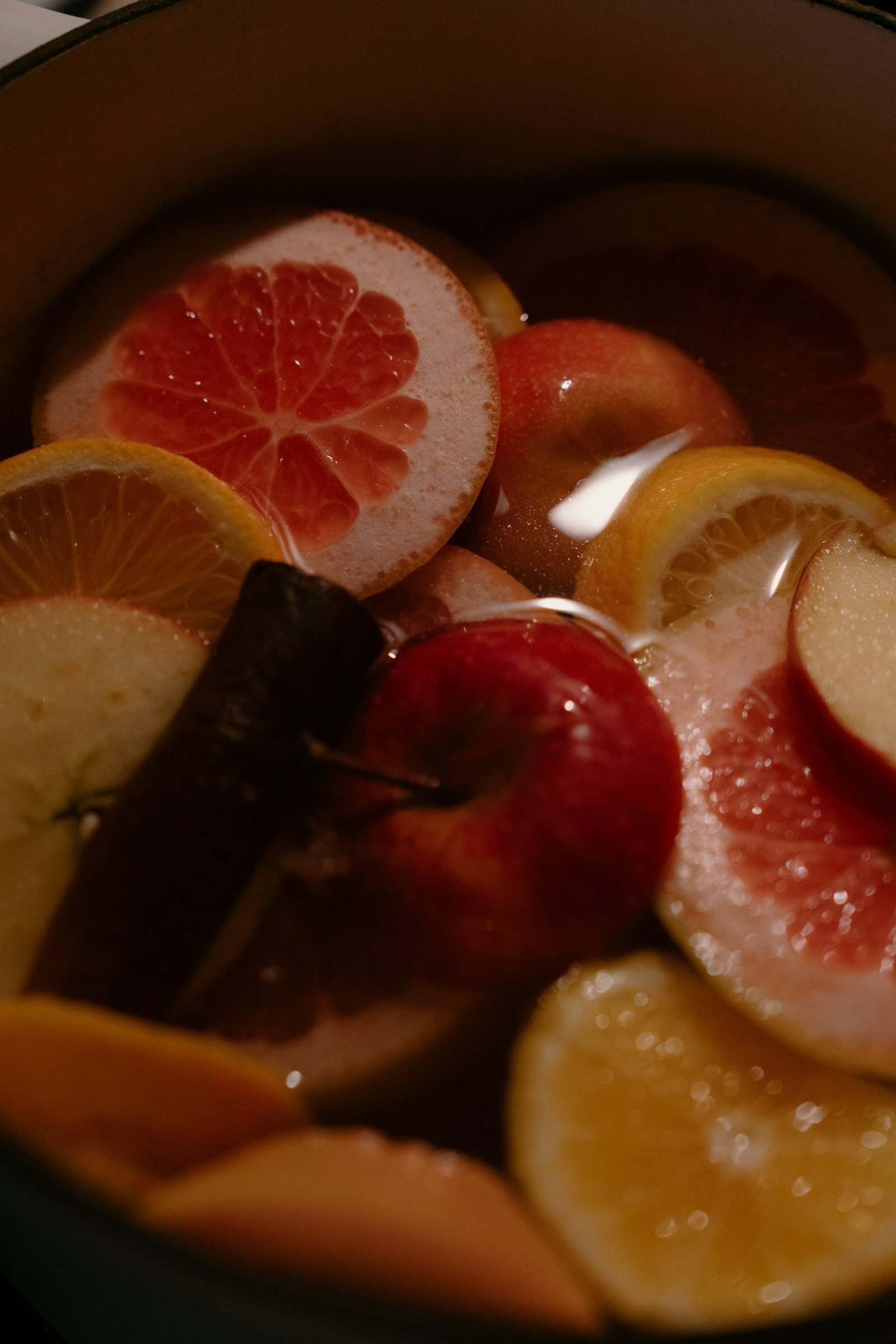
There is no universal formula. The core flavors usually involve honey, orange, lemon, cinnamon, cloves, and whiskey. Some versions add ginger ale, raisins, allspice, caraway, or other spices. Four Queens whiskey became closely associated with local preparations, although it is not required and is not the historical origin of the drink.
Here is a practical, original recipe designed around common regional ingredients. It is not represented as the earliest or only authentic version.
Holiday boilo ingredients
- 2 oranges and 2 lemons, washed
- 4 cups water and 2 cups ginger ale
- 1 to 1½ cups honey
- 3 cinnamon sticks
- 6 whole cloves and 6 whole allspice berries
- ½ teaspoon caraway seeds, optional
- 1 tablespoon freshly sliced ginger
- ¼ cup raisins, optional
- 2 cups legally purchased whiskey, for an adults-only version
Instructions
- Slice the citrus and squeeze the juice into a large pot. Add some fruit and peel for aroma, leaving out excessive bitter pith.
- Add water, ginger ale, honey, and the spices. Stir until the honey dissolves.
- Simmer the nonalcoholic base gently for approximately 25–30 minutes. Stir occasionally and do not leave the pot unattended.
- Turn off the burner, move the pot away from the cooking surface, and strain out the solid ingredients. Let the liquid cool to a comfortably warm temperature.
- If making alcoholic boilo, stir in the whiskey only when the pot is fully removed from heat and away from flames and other ignition sources. Never pour alcohol into boiling liquid or near a hot burner.
- Serve in small heat-safe cups. Refrigerate leftovers promptly in clean, food-safe containers.
Prefer a drink for everyone? Omit the whiskey and replace it with additional cider, ginger ale, or water to create a nonalcoholic citrus-spice punch. Keep alcoholic and nonalcoholic containers separately labeled. Alcoholic boilo is intended for adults of legal drinking age and is not a remedy for colds or other illnesses.
Holiday traditions and keeping important records organized
Winter gatherings are often when relatives visit from out of town and families have a little more time to talk. Sometimes those conversations include practical topics: where an older family recipe is stored, who has copies of important household documents, or whether a family member has updated a mailing address after a move.
Keeping an orderly home file can prevent confusion later. This can include copies of insurance contacts, property-related records, warranties, and other household information. Store sensitive papers securely and avoid leaving personal records out where guests can see them.
When a document actually requires notarization, do not assume that having a notary stamp nearby automatically makes it suitable for immediate signing. Some documents have specific witness requirements or other formalities, and a notary must complete the applicable identity and notarial steps. A notary cannot choose the legal document for you or provide legal advice unless separately authorized to do so.
Planning ahead during the holidays can help. Offices and shipping providers may have different schedules, and travel can complicate last-minute appointments. If a signing is time-sensitive, confirm the receiving party’s instructions, relevant deadlines, identification needs, and whether witnesses are required before scheduling.
Five ways to preserve your family’s holiday customs
- Write down the recipe. Include real measurements, not just “a little of this and that.”
- Record the hometown. Note whether it came from Shenandoah, Mahanoy City, Pottsville, or another community.
- Keep a story with it. Write down the name of the person who made it and the holiday when it was traditionally served.
- Make a nonalcoholic option. Children and adults who do not drink can still enjoy the citrus-and-spice flavors.
- Save a copy. A photograph or scanned recipe card can be a helpful backup if the original gets lost.
The goal is not to make every holiday identical. It is to preserve the details that matter to your own family while welcoming new traditions.
Celebrating our Pennsylvania neighbors
From familiar food and neighborhood celebrations to family stories passed along for generations, Schuylkill County has a rich cultural character. Boilo is one small but memorable example. What began with immigrant families adapting honey-and-spice drinks has become a tradition shared across many backgrounds.
For the full history, recipe variations, and the connection to Pennsylvania’s anthracite communities, visit SkookPA Newz’s detailed boilo history and recipe. To learn more about the communities and homes of Schuylkill County, explore KennethHoffmaster.com.
If you need Pennsylvania notarial or document-signing services over the holiday season, Ken’s Notary offers information about available services and how to request an appointment. Check availability and document requirements in advance rather than assuming holiday coverage.
Sources: Schuylkill County Ethnic Heritage Study; WVIA; Pennsylvania Capital-Star.
0 Comments